Keeping Watch Over the Upper Delaware: New Reports Signal Progress for the Tailwaters
If you’ve spent any time along the Upper Delaware River (UDR) tailwaters in recent years, you’ve probably noticed something encouraging: more attention is finally being paid to this remarkable fishery and watershed system.
That increased focus from the New York State Department of Environmental Conservation (NYSDEC) and the Pennsylvania Fish and Boat Commission didn’t happen by accident. It’s the direct result of years of advocacy and persistence from Friends of the Upper Delaware River (FUDR), Trout Unlimited, and the many conservation-minded anglers and supporters who continue to speak up for these waters.
Today, both agencies are more actively engaged in everything from fisheries policy to habitat protection and restoration. Much of that work is grounded in two important frameworks: the 2022 NY/PA Joint Fisheries Investigation Plan (JFIP) and the 2025 UDR Joint Tailwaters Trout Management Plan, commonly referred to as the “UDR Trout Plan.”
Recently, two significant reports connected to those efforts were released, both offering valuable insight into the health and future management of the watershed and the wild trout fishery.
A Closer Look at the Catch-and-Release Impact Study
Back in 2022, New York State opened all trout waters to year-round angling, a decision that sparked considerable debate among anglers across the state. Many UDR anglers worried about the possible effects expanded fishing pressure could have on tailwater trout during sensitive spawning periods.
In response to those concerns, NYSDEC committed to a three-year impact study examining 19 high-quality trout rivers, including the UDR tailwaters.
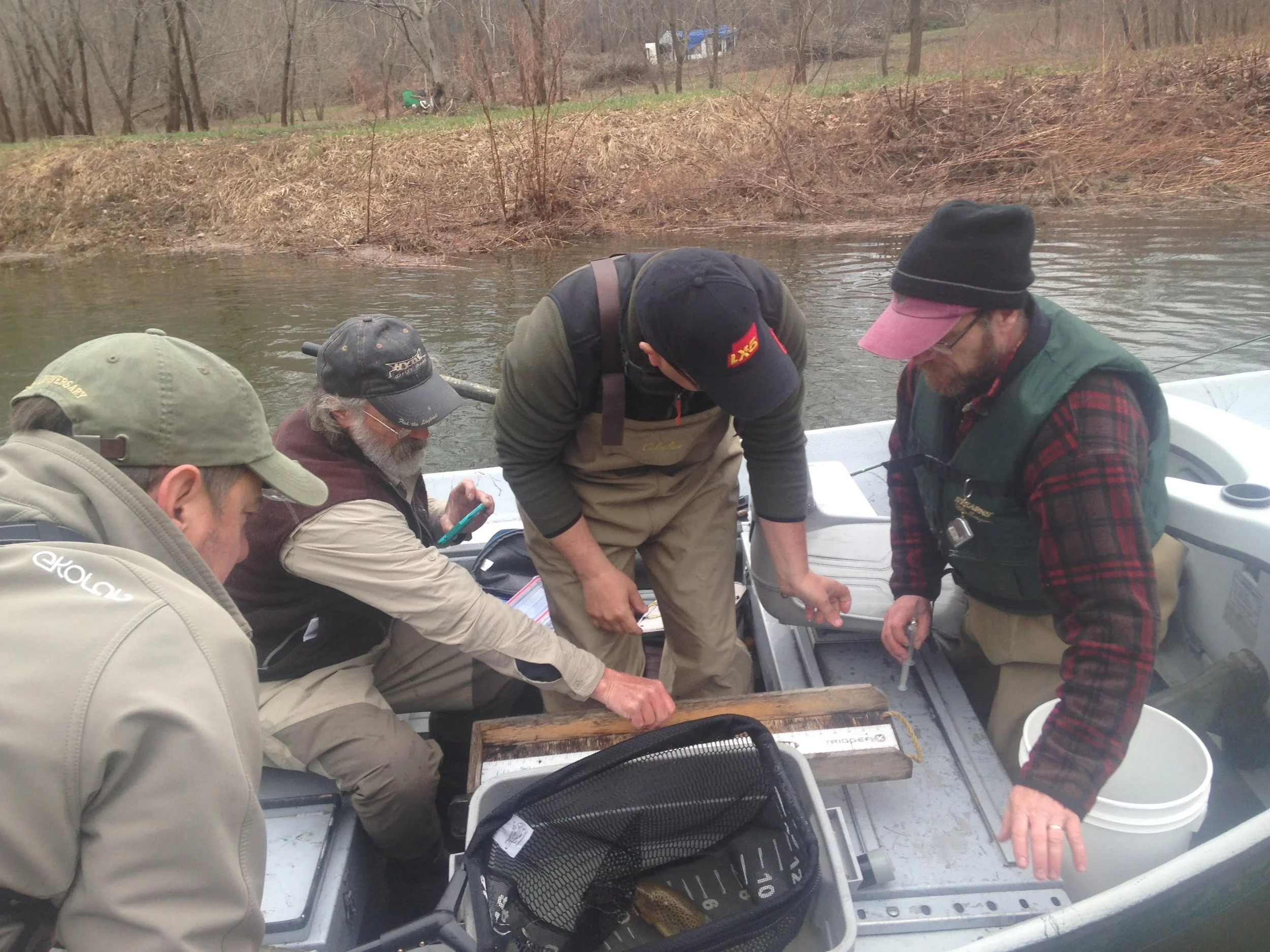
The study focused heavily on monitoring “Young of the Year” (YOY) trout populations while also conducting visual inspections of angling activity in heavily used spawning areas. The goal was straightforward: determine whether the October-to-April catch-and-release season was negatively affecting trout recruitment or river health.
For the Upper Delaware tailwaters, the findings were reassuring. The study concluded that the expanded angling season resulted in minimal to no measurable impacts on YOY trout populations.
That said, the conversation doesn’t end there.
FUDR and Trout Unlimited carefully reviewed the study results and provided constructive feedback to the agencies, including suggestions to:
Make future reports more accessible and readable for stakeholders
Better account for differences in scale between the rivers studied
Create opportunities for more angler participation and input
Expand documentation explaining study methods and monitoring practices
As with any long-term fisheries management effort, transparency and continued collaboration remain critical.
The First Annual UDR Report Card
Another milestone stemming from the UDR Trout Plan is the release of the very first Annual UDR Tailwaters Fishery Report Card.
This report represents an important commitment from NYSDEC to provide anglers and watershed stakeholders with regular updates on the condition of the wild trout fishery and the progress being made toward management goals.
Think of it as a yearly “health check” for the river system.
The Report Card is designed not only to track current conditions but also to guide future management decisions. If scoring metrics begin to show declines or emerging problems within the fishery, the agencies can adapt their management strategies accordingly.
For those of us who care deeply about the future of the Upper Delaware, this type of accountability and ongoing evaluation is a welcome step forward.
Why These Reports Matter
The Upper Delaware tailwaters are more than just a destination fishery. They are a living, complex watershed that supports wild trout, local communities, recreation, and a long tradition of stewardship.
That’s why angler observations and public involvement remain so important.
Anglers and other river users who spend significant time on the river, watch seasonal changes unfold, and notice subtle shifts in insect hatches, temperatures, flows, and fish behavior often provide insights that no data sheet alone can capture.
We strongly encourage everyone with an interest in the UDR watershed and its wild trout fishery to review these reports and stay engaged.
Another important element of the Tailwaters Plan is the use of a QR Code angler survey to gather important information about the UDR angling experience that can be used by the DEC to further refine their fisheries management efforts. DEC has placed survey signs at multiple access points along the river for your convenience and it only takes a few minutes to complete the survey. Thank you for taking the time to fill out the survey!
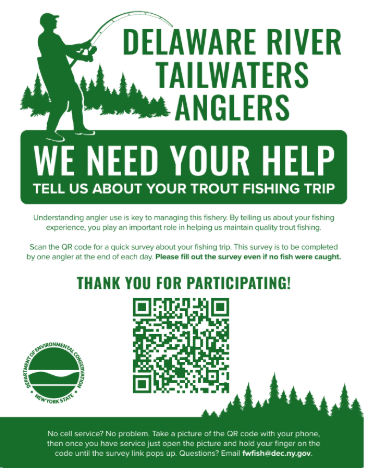
Delaware River Tailwater Anglers Survey QR Codes have been placed by NYSDEC throughout the river at various public accesses
As always, if you have questions, observations, or suggestions, please continue sharing them. Strong communication between anglers, conservation groups, and fisheries agencies is one of the best tools we have for protecting this incredible river system for generations to come.
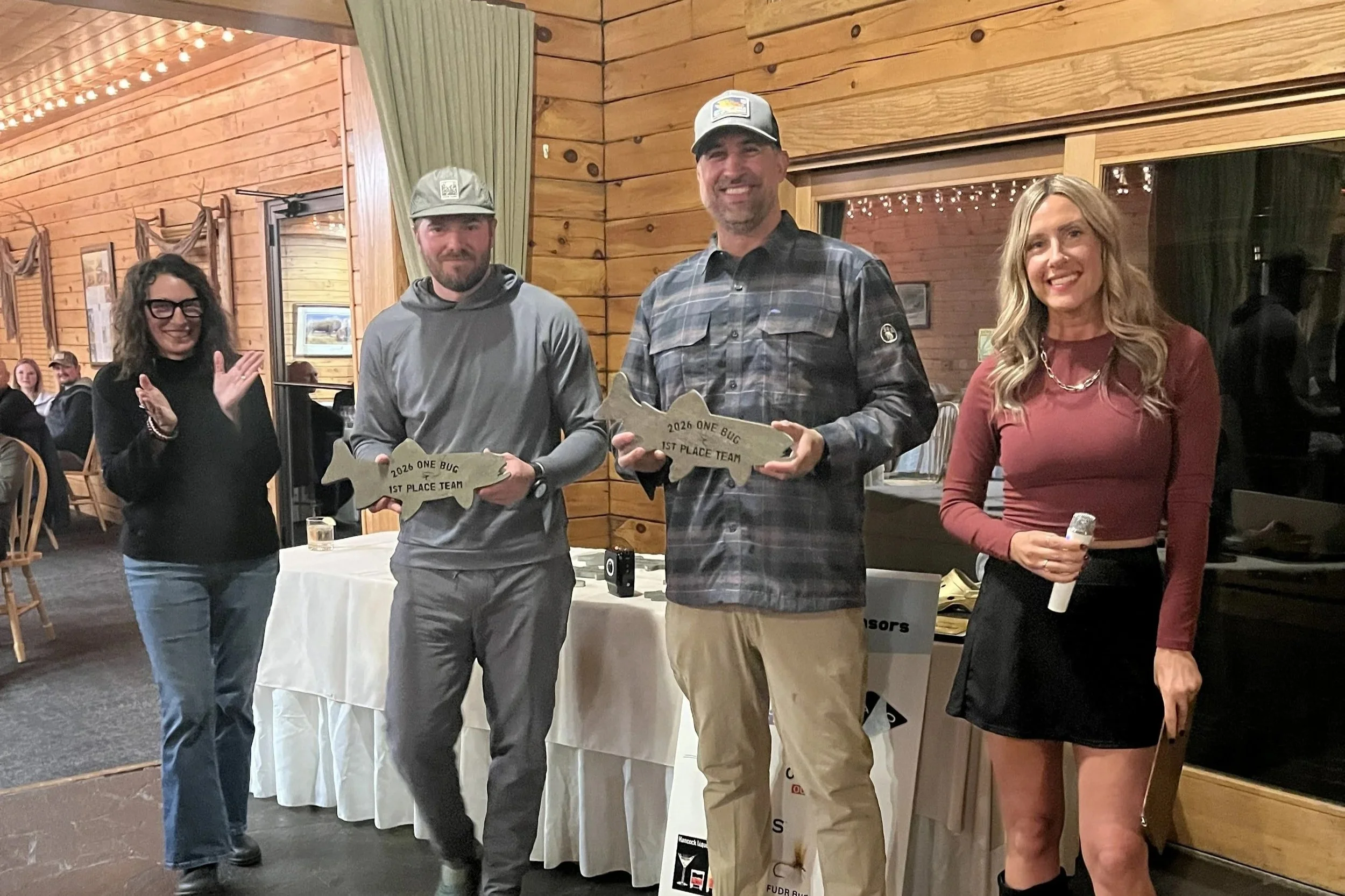
2026 FUDR One Bug, Come Shine or Rain!
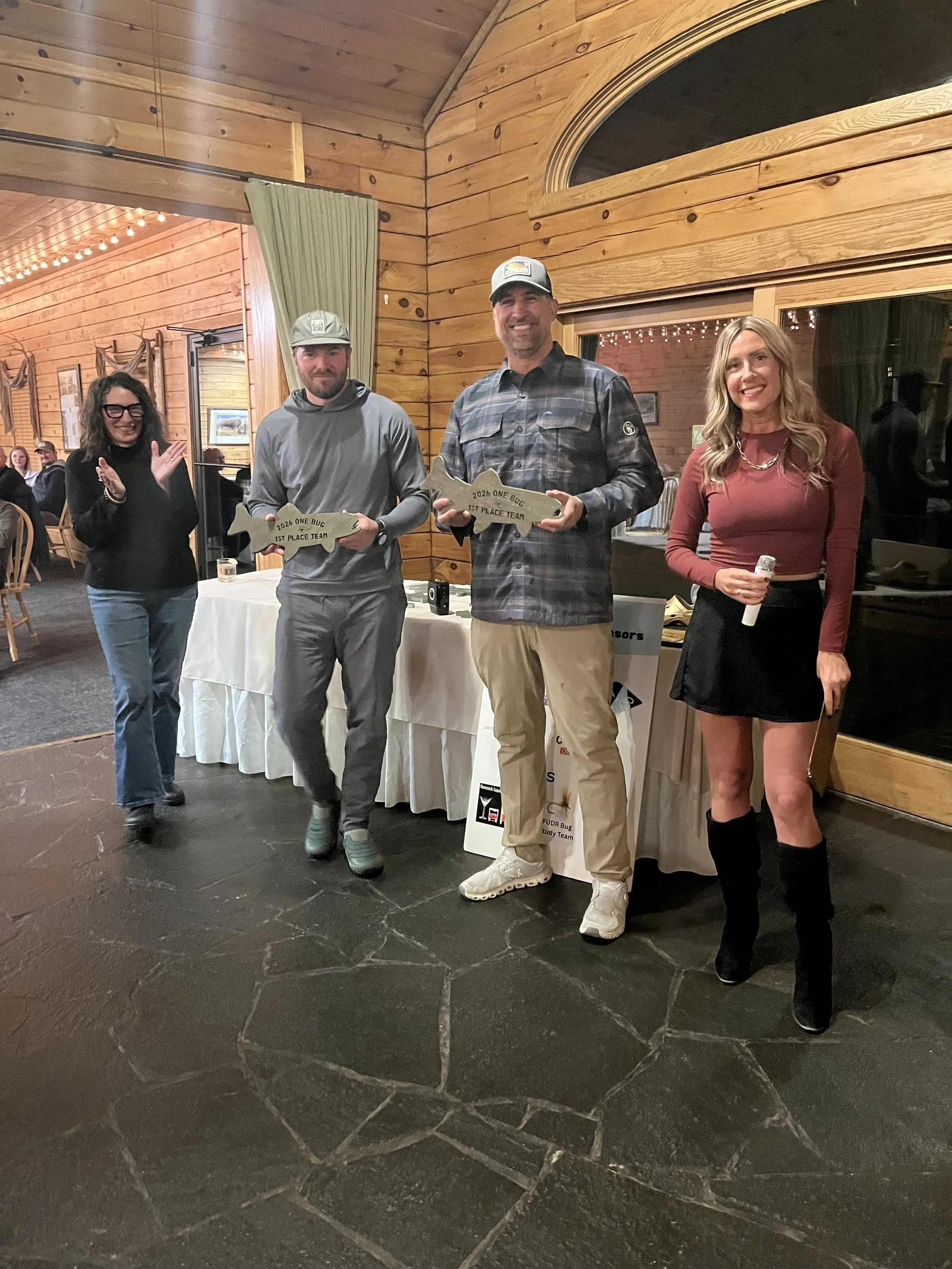
The 2026 FUDR One Bug is in the books and this year’s event highlighted the many dimensions of the unique UDR wild trout fishery and the passionate anglers and guides that come back year after year to ply its challenging waters.
Thanks to all our participants and supporters who helped make the One Bug such a success and for assisting FUDR in advancing our important river conservation initiatives!
First, the weather. Wind, rain, sun, clouds, and air/water temperatures play a critical role in the sport of fly fishing. Over the course of two days, our anglers and guides experienced the full spectrum of weather conditions during this year’s One Bug.
Day 1 arrived with pleasant temperatures, moderate wind, plenty of sun, and rising fish throughout the day with angler tallies reflecting those favorable conditions.
Day 2 couldn’t have been more different as a persistent all-day rain combined with air temperatures in the low 40’s (but it felt like 30’s) and windy conditions chilled our anglers to the bone.
Many veteran One Buggers described Day 2 as the worst weather conditions they have ever endured in the history of the event. To the casual observer, the sight of three anglers on a boat under those Day 2 conditions must surely seem astounding and let’s face it.... ridiculous. What they don’t see is the dedication, stamina, and eternal optimism of the UDR angler and their intrepid guides.
We tried something different this year by allowing our teams and their guides to choose their beats. Many anglers and guides have river section preferences based on their knowledge of the system, past experiences, and insight into angling conditions leading up to their day on the river. Amazingly, and for the first time ever, not a single boat chose the West Branch on Day 1 highlighting the mercurial nature of the UDR tailwater fishery that continues to hold mystery even for veteran anglers.
As always, Sherri and Shell did a stellar job making sure the needs of our participants were fully met. The One Bug takes a full year in preparation and so many details need to come together to ensure a safe and enjoyable experience for everybody. Thanks Sherri, Shell, and the FUDR One Bug Committee volunteers who devote countless hours planning this top-notch event!
The One Bug is about angling but it’s also about community. Hancock area businesses welcome the One Bug and recognize it as the kick-off to the UDR recreational season which is critically important to the economy of the region.
Our heartfelt appreciation is extended to the Hancock House Hotel, West Branch Angler, Circle E Diner, The Bat Factory, All Sorts, and Little Italy II for providing great meals and their gracious hospitality to keep our participants well fed and fueled up!
Our expression of deep gratitude goes to FUDR Board Chairman Craig Bouslough for hosting the Thursday night One Bug kick-off banquet at his beautiful home on the Delaware River main stem. “Pitmaster” Mike Cartechine and his crew served up a fantastic dinner! Mike has been our banquet chef extraordinaire for every One Bug. The potato ramp soup was a huge hit, Mike! Theresa from the Hancock Liquor Store and the Roscoe Beer Company generously donated the spirits for the evening. And many thanks to our versatile and highly skilled music men Darren Rist, Rich Thomas, and Pete Horger who brought their guitars, horn, and harmonies.
A special feature of the One Bug is the inclusion of a youth team comprised of alumni from our annual summer Fly Fishing Camp. We sure hope the four anglers on our Fly Camp team, and their predecessors, are emblematic of the future of fly fishing. Every year we are amazed at their angling skills, conservation knowledge, and leadership abilities. Thanks to FUDR Board member and Fly Camp leader Steve Taggert for his careful tutelage guiding four of our camp participants through the two days of fishing. Congratulations to Ben Gleason, Madi Charlier, Rex Sanclimenti, and Edward Baiazitov for their successful and inspiring One Bug performances! Two other former graduates - Isaac Jensen and Max Kowal - fished together as Team ‘Camp Alums’ in the event and did a great job!
Thanks to the Indian Springs Fly Fishing Club, long time FUDR supporters, who graciously granted us their ramp access helping us diversify the beats and provide our anglers with more space to fish the river. So helpful guys!
The Beaver-Del and Ray Turner helped us out by offering river access on the East Branch assuring the entire system was open for One Bug participants. Thanks Matt and Ray!
Joe Demalderis at Cross Current Outfitters provided his shop and grounds to coordinate One Bug logistics and to keep Sherri, Shell, and Drew dry on Day 2 as they handed out lunches for the guides and teams. Thanks, Joe!
Recognition and appreciation go out to our growing list of One Bug sponsors who help jumpstart our event by donating gear and providing financial support to help make it all possible:
Airflo, Axelrad, Crosscurrent Outfitters, FUDR Bug Study Team, Grundens, Hancock Liquor Store, Mako Reel Co., Orvis, Roscoe Beer Co., Sam & Wayne Decker, West Branch Angler
Finally, the 2026 One Bug award winners! As Blake Chapman noted at the Awards Dinner, everybody deserves a trophy for muscling through the harrowing weather conditions of Day 2. So true!
We’ve got some great anglers and guides on this river. Congratulations to all the winners!
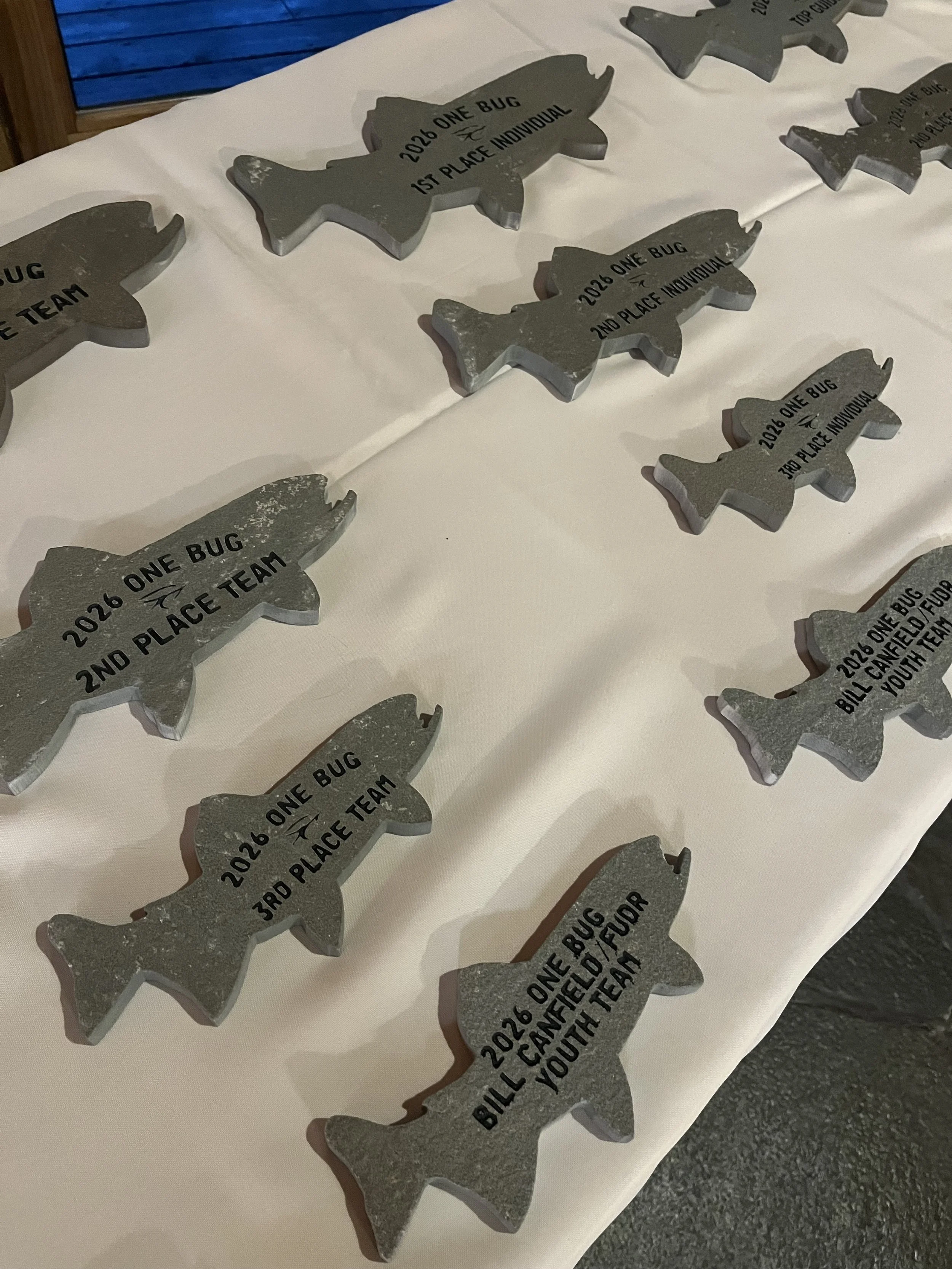
Top Individuals
1st - Adam Raleigh (Team Upper East Anglers)
2nd - Larry Flinn (Team Abel)
3rd - Mike Sudal (Team Upper East Anglers)
Top Teams
1st - Team Upper East Anglers (Adam Raleigh & Mike Sudal)
2nd - Team Trout Unlimited (Steve Trafton & Ben Clauss)
3rd - Team Abel (Larry Flinn & Joe Cusato)
Top Guides
1st - Chris Dever
2nd - Rich Thomas
3rd - Matt Ertzinger
Biggest Fish
Joe Cusato - 21.5” on a streamer
Squirrel Award (most heroic rescue of a fly by a guide)
Joe Xumphonphakdy
Golden Sandal Award (most colorful story of the weekend)
Chris Osti (Team Mama Luke)
All One Bug Scores:
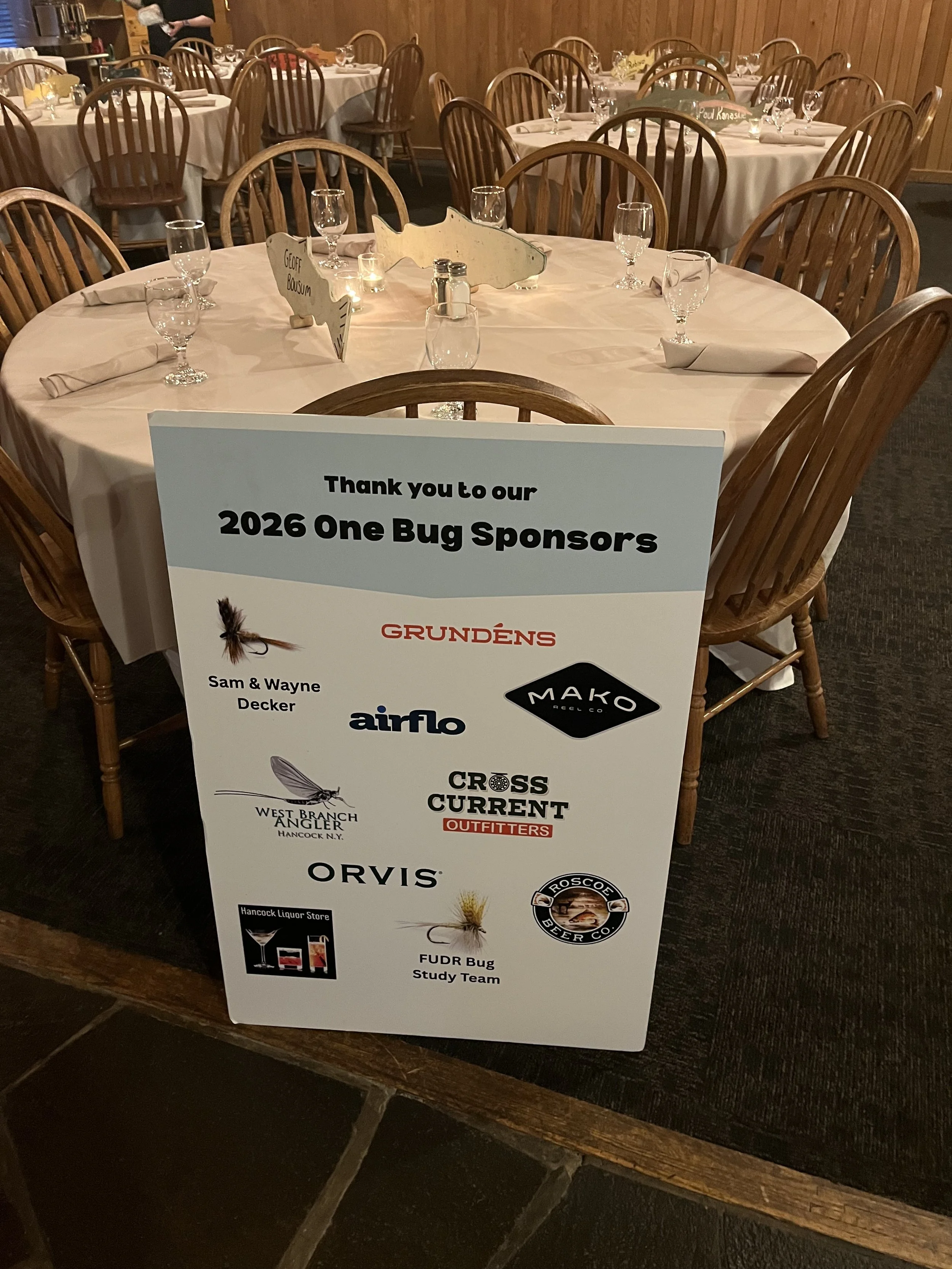
Thank you to our 2026 Sponsors!
Sam & Wayne Decker
FUDR One Bug Study Team
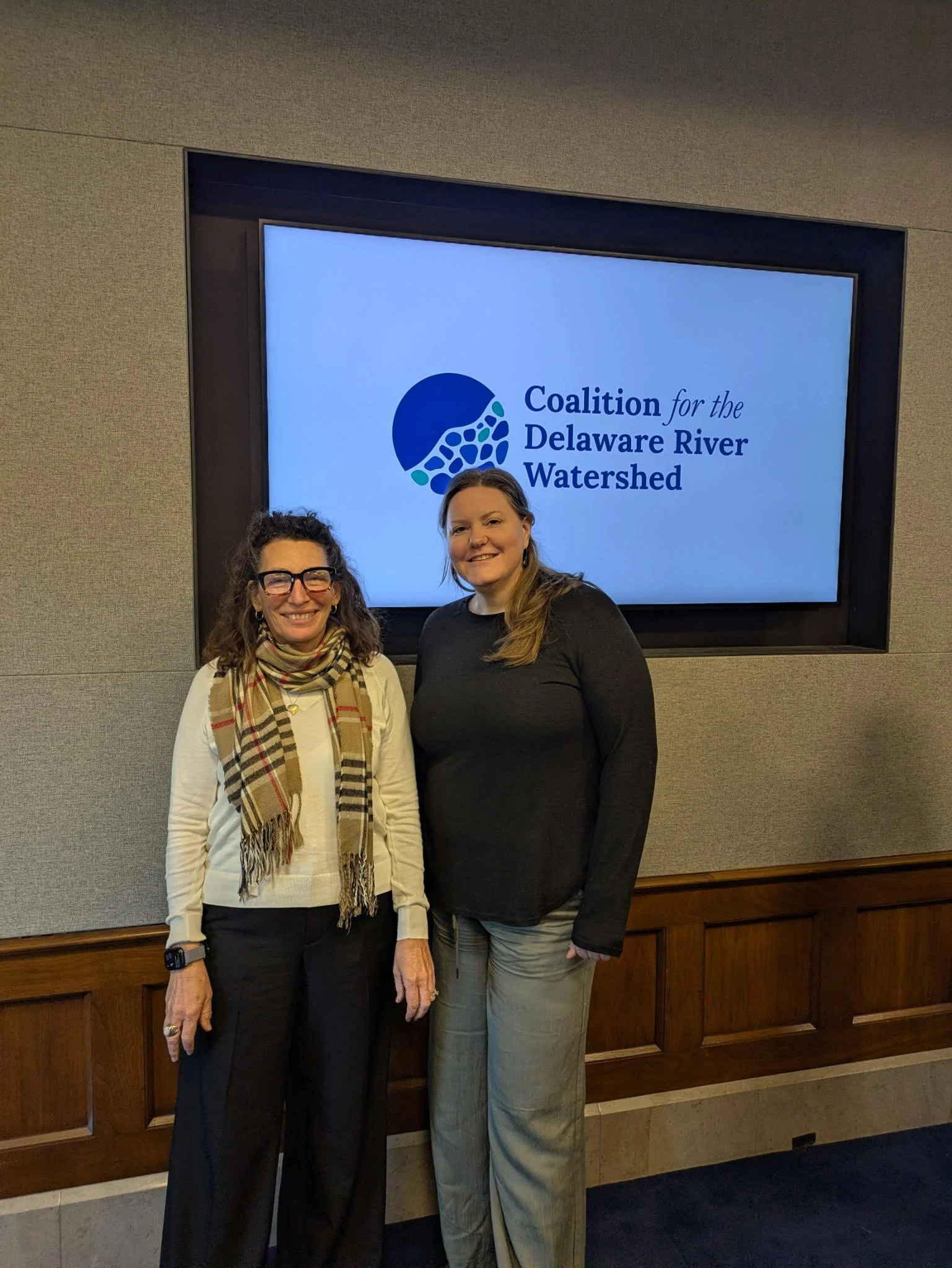
The Importance of the Federal Government to the Upper Delaware River Watershed
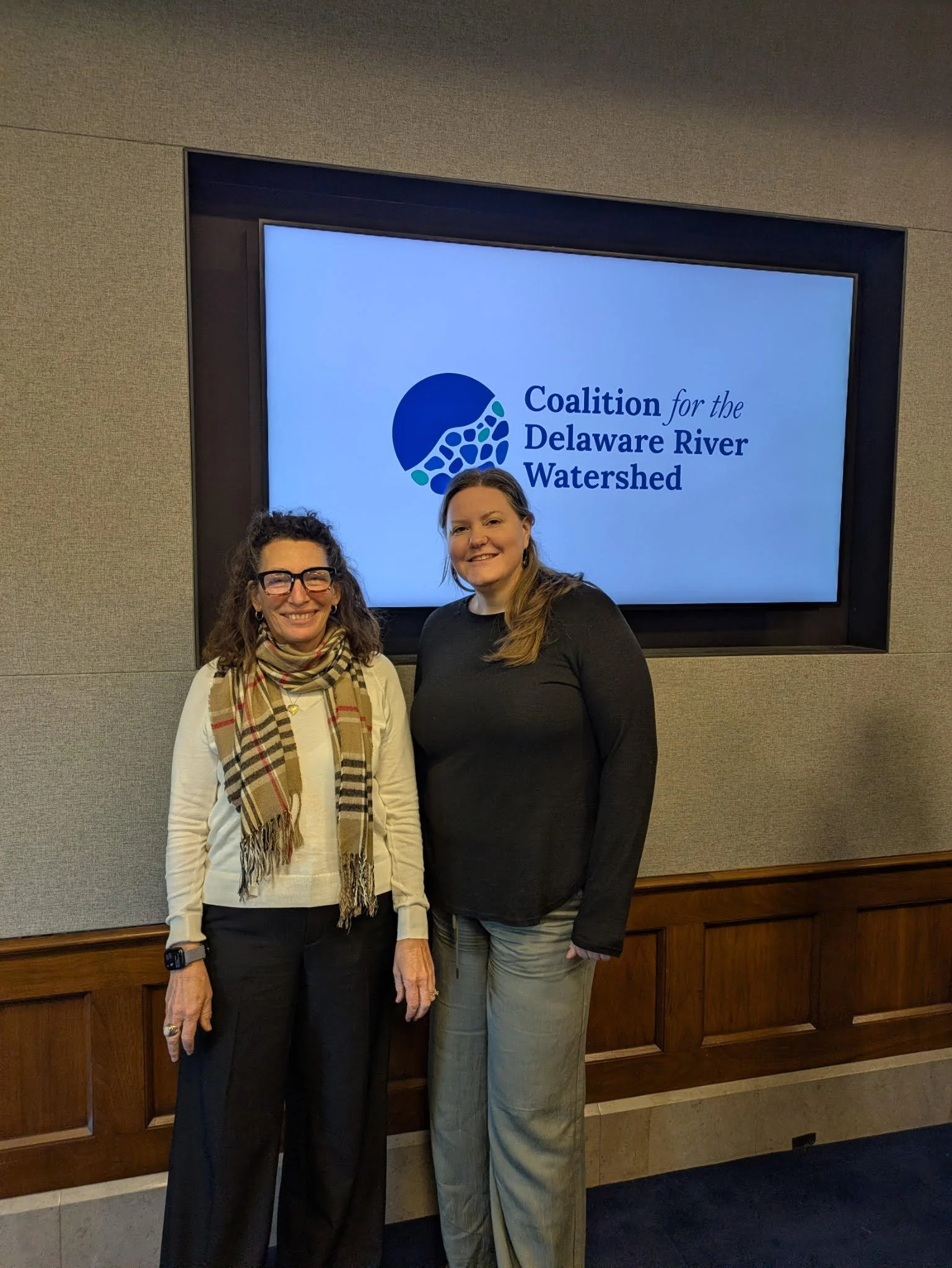
FUDR Leaders joined the Coalition for the Delaware River Watershed Convene on Capitol Hill this Week
Do you ever wonder what the connection is between the federal government and our conservation efforts in the Upper Delaware River watershed?
While Washington DC seems far away and seemingly removed from the daily effort of protecting our river, the federal connection is quite significant and extremely important.
For many years now, FUDR and our conservation partners have worked on a bi-partisan basis with the members of the New York and Pennsylvania U.S. Congressional delegations to educate them about the economic and environmental importance of the UDR watershed.
This work isn’t easy. It requires countless hours of relationship building, clear sighted communication, rigorous diligence, extreme patience, and an unwavering passion and dedication to the protection of our river and the people who live here.
That hard work paid off in 2017 when the U.S. Congress and the office of the President signed off on a new federal program called the Delaware River Basin Restoration Program (DRBRP). Adopted in 2017, this program has generated more than $5 million in conservation investments in the Upper Delaware River for projects that protect aquatic habitat and water quality, build climate resilience, support local government investments in public infrastructure and flood mitigation, and enhance river based recreational opportunities.
This week, Molly and Sherri from the FUDR staff, along with numerous conservation partners including Trout Unlimited and the Delaware Highlands Conservancy, will be on Capitol Hill educating our members of Congress from New York State and northeast Pennsylvania about the critical importance of our conservation work. They will relay success stories on numerous DRBRP projects throughout the UDR watershed that generate multiple benefits for all stakeholders and emphasize to lawmakers the critical importance of continued federal support for these efforts.
Local governments, business owners, anglers, recreational enthusiasts, and everybody who cares about the Upper Delaware River watershed should rest assured that the work of FUDR and our conservation partners in the nation’s capital is extremely meaningful, generates tangible results back home, and serves as the leading conservation voice at the federal level for our watershed.
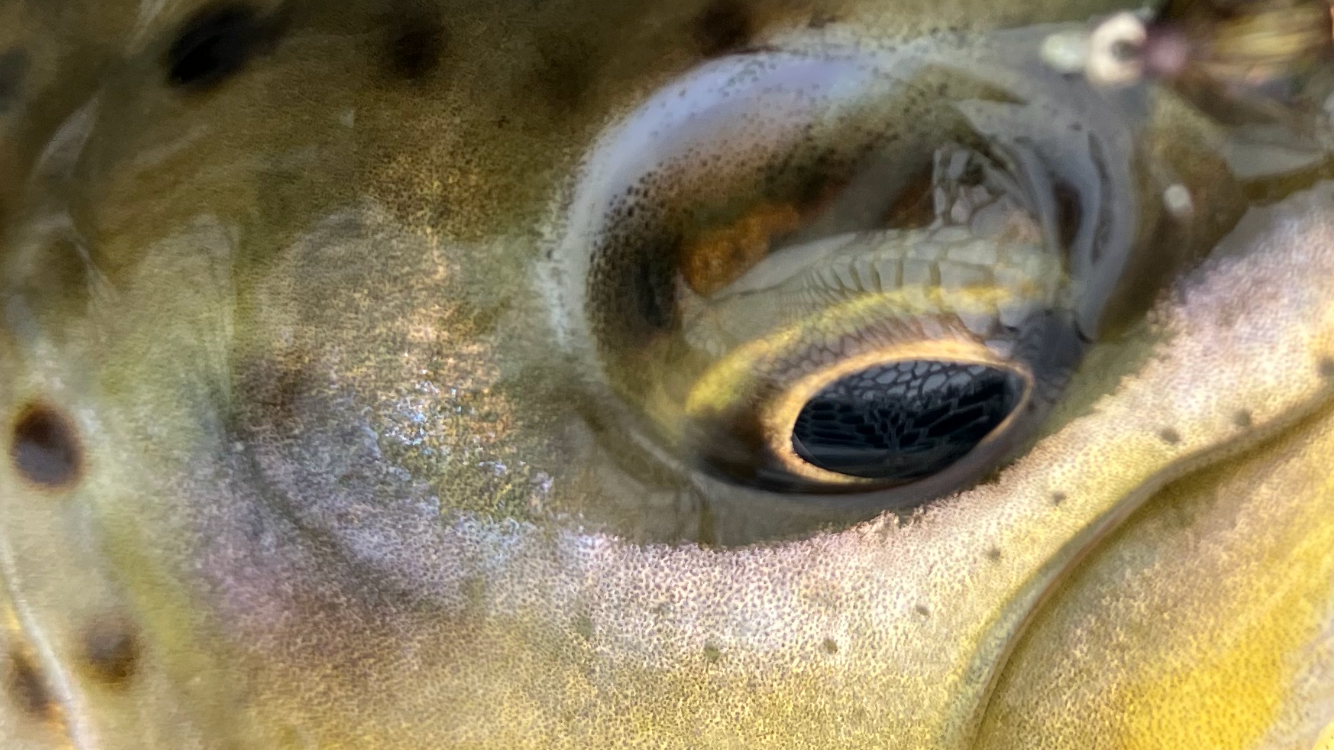
NYSDEC/PFBC Working in Partnership to Study the Upper Delaware River Tailwater Fishery
NYSDEC/PFBC Working in Partnership to Study the Upper Delaware River Tailwater Fishery
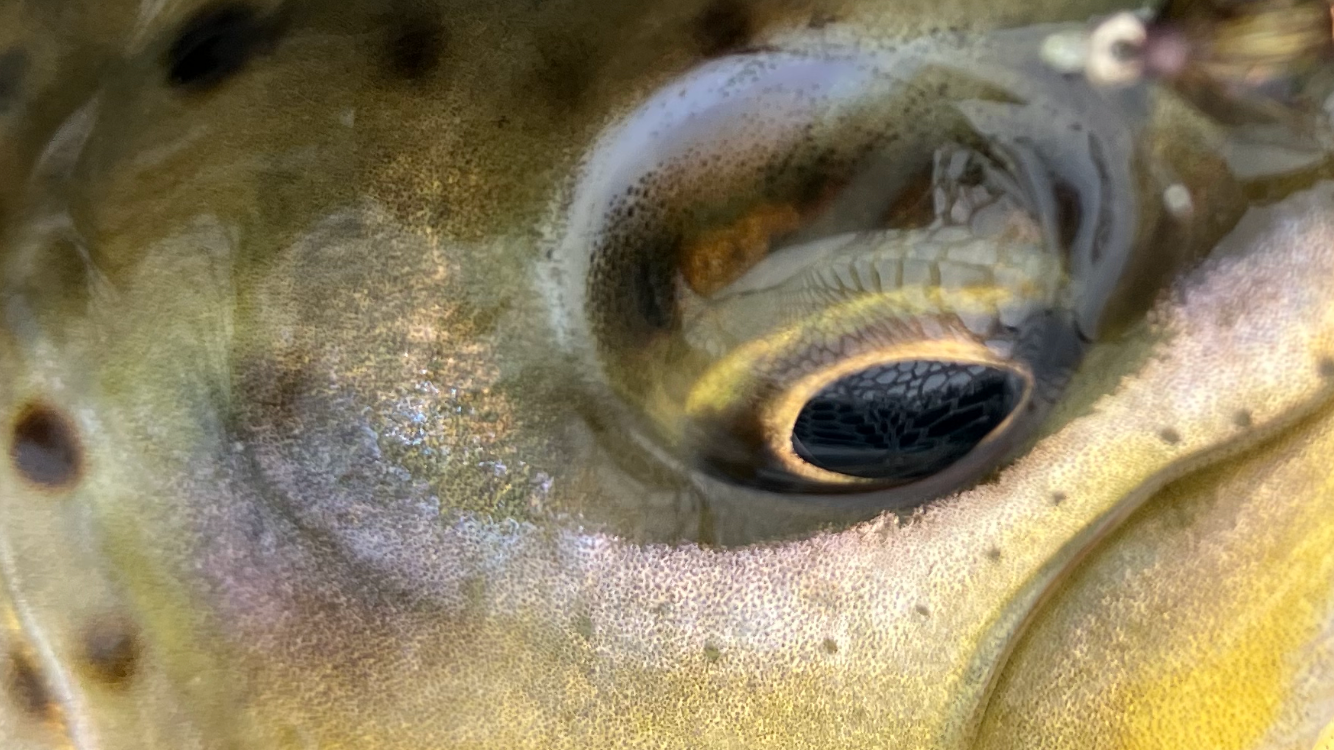
Photo Caption: Brown Trout Close Up
In recent years, the New York State Department of Environmental Conservation (DEC), in partnership with the Pennsylvania Fish and Boat Commission (PFBC), have been actively studying the Upper Delaware River tailwater fishery.
As a quick refresher, FUDR and our conservation and angling partners played a key role in working with the two state agencies to help initiate 3 important studies that take a closer look at the condition of the tailwater fishery and to develop management strategies for its long-term protection:
1. NY/PA Delaware Tailwaters Joint Fisheries Investigation Plan (JFIP) (2018-2020)
The JFIP is a 3-year study (2018-2020) that collected biological and social (angling focus) data to assess the status of the fishery and create a new baseline of scientific information.
https://dec.ny.gov/sites/default/files/2024-03/jfipsummary.pdf
2. Delaware Tailwaters Joint Trout Management Plan (2025)
This study used information from the JFIP to develop a plan that identifies future agency management priorities specifically for the UDR tailwater fishery
https://dec.ny.gov/sites/default/files/2025-02/delawaretailwatersplan.pdf
3. Angler Use and Wild Trout Young of the Year Recruitment Study (2026)
In 2021, DEC completed its first ever statewide trout management plan. As part of that plan, the state opened NY trout streams to year-round angling. In response to angler concerns about the potential impacts of the new catch and release season (October 16-March 31), the agencies initiated a 3-year impact study on many of NY’s high quality trout streams, including the UDR tailwaters, to determine impacts from increased angling pressure and on “Young of the Year” wild trout populations.
https://dec.ny.gov/sites/default/files/2026-02/troutcatchreleasestudyreport.pdf
It’s important to note that the UDR tailwater wild trout fishery has now received a substantial amount of attention and resources from both the DEC and the PFBC to expand everybody’s knowledge about the condition of the fishery and to identify key long term management objectives. We are deeply appreciative of this commitment and will continue to work with both agencies to refine and expand their work.
While constant vigilance is always required to ensure the long-term health of our wild trout fishery, these three studies reveal very positive news. Overall, the study findings depict a robust population of naturally reproducing UDR wild trout, healthy in-stream habitat conditions, and minimal impacts from the extended angling season.
It’s important to remember that the studies represent a snapshot in time and frequent monitoring, ongoing evaluation, and adaptive management strategies are critical. As many UDR anglers know, increasing pressure on the river, changing weather patterns, reservoir management, and land use practices are examples of potential threats that always require a watchful eye.
Both state agencies have made commitments to continue and expand their monitoring and project work to ensure that any negative impacts on the fishery receive rapid and corrective management responses.
Of special note, the Delaware Tailwaters Joint Management Plan created a first ever UDR Tailwaters Fisheries “Report Card” to be issued annually. The report card will evaluate each management objective in the plan and provide a status report on progress. The first report card will be issued in March 2026 and we will be sure to share that with you when it is released.
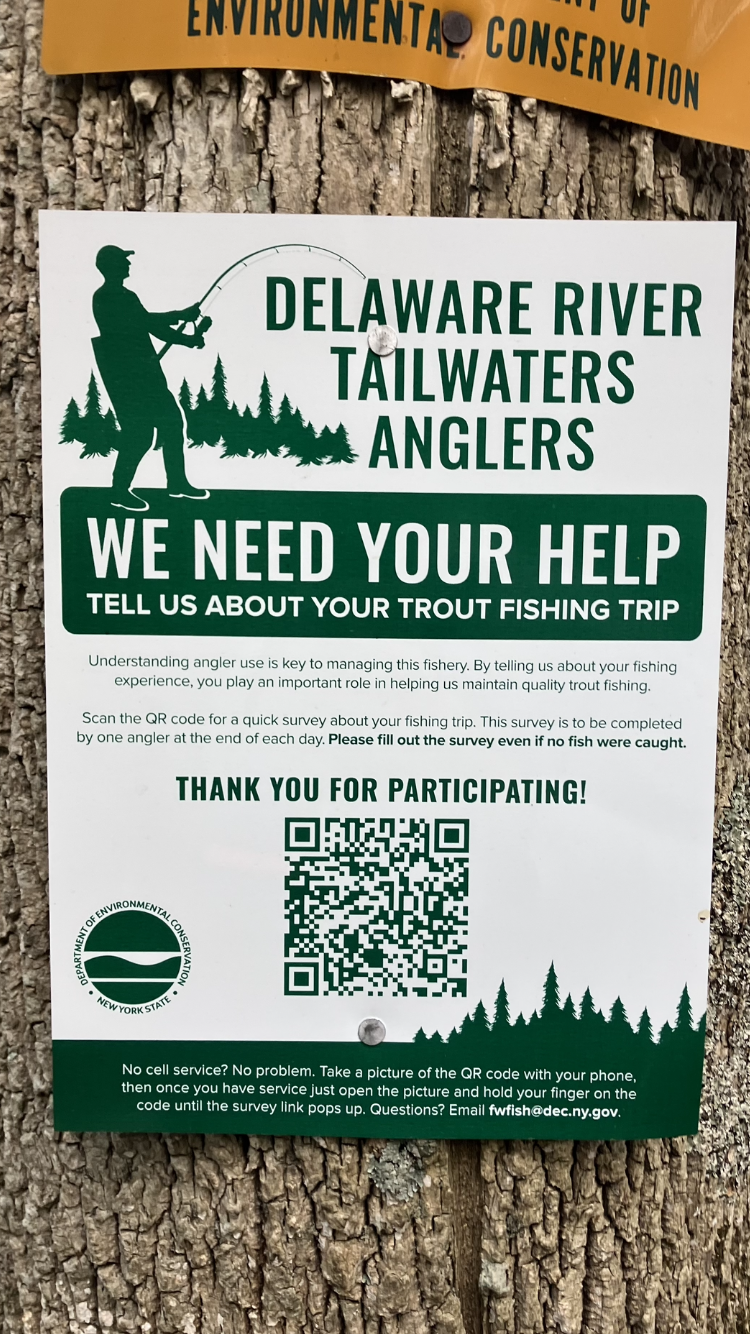
Another important element of the Tailwaters Plan is the use of a QR Code angler survey to gather important information about the UDR angling experience that can be used by the DEC to further refine their fisheries management efforts. DEC has placed survey signs at multiple access points along the river for your convenience and it only takes a few minutes to complete the survey. Thank you for taking the time to fill out the survey!
Please take a moment to review these reports and feel free to contact us with any questions or concerns.
For the River,
Jeff Skelding
FUDR Angling Advocate
skelding@fudr.org

Directed Releases on the Upper Delaware River

Photo Caption: Cannonsville Dam
If you’ve ever tried to read about how the NYC Delaware River Basin reservoirs in the western Catskills are managed, you’ve probably run into a wall of technical terms and acronyms. It can feel like you need a translator just to figure out what’s going on!
That’s why one of the goals of the FUDR Angling Advocacy Program is to cut through the jargon and make reservoir management easier to understand. We want anglers and everyone who cares about the river to feel confident joining the conversation.
One term you’ll hear a lot is “Directed Releases.” In simple terms, these are specific amounts of water that New York City releases from its three Delaware River Basin reservoirs - Cannonsville, Pepacton, and Neversink -under the rules of the Flexible Flow Management Program (FFMP), the plan that governs overall reservoir operations.
Directed releases are additive to baseline FFMP conservation releases and are mandated under the 1954 U.S. Supreme Court Decree, which established a minimum flow target of 1,750 cubic feet per second (CFS) at the USGS Montague, NJ gauge on the Delaware River.
On a daily basis, the USGS Delaware River Master, based in Trenton, NJ, monitors weather patterns, precipitation and other basin inflows, including hydropower releases from mid and upper basin facilities above the Montague gauge. When river flows are predicted to drop below the Montague target, the River Master is authorized by the 1954 Decree to require New York City to release additional water - known as directed releases - from the upper basin reservoirs.
For many anglers on the Upper Delaware River (UDR), directed releases are often welcome especially under low flow conditions in the tailwater wild trout fishery. Increased flows can enhance habitat conditions and improve angling opportunities. However, several important considerations apply:
Cold Water Supply is Limited: The annual cold-water reserves in the NYC reservoirs that are essential for trout survival are also finite. Frequent directed releases during dry periods can deplete this supply, potentially impacting fishing conditions later in the season.
Forecasting Limitations: Directed releases are based largely on weather forecasts, which, while generally reliable, are not infallible. Additionally, hydropower releases in the upper basin are not always known or predictable. As a result, actual flows may exceed or fall short of the Montague target. Such discrepancies are managed through the River Master’s “balancing adjustment” procedure.
Spawning Season Impacts: Directed releases often occur during fall dry spells, which coincide with brown and brook trout spawning. Rapid decreases or shutdowns in releases can expose redds (spawning beds), endangering trout reproduction.
Mitigation Measures: In 2017, the UDR angling and conservation community successfully advocated for the creation of the FFMP “Rapid Flow Change Mitigation Bank.” This reserve allows for gradual reductions in directed releases once flow targets are met while attempting to mimic the natural rhythms of a river (not controlled by dams/reservoirs) and help protect spawning habitat.
Reservoir Selection: The NYC Department of Environmental Protection (NYCDEP) determines which reservoir(s) supply directed releases. Typically, Cannonsville Reservoir is used due to its large release capacity, while Pepacton and Neversink are prioritized for NYC’s water supply. As a result, enhanced angling conditions often occur in the West Branch and main stem, but less so in the East Branch and Neversink.
Recently, the UDR angling and conservation community urged NYC to use all three reservoirs for directed releases. This approach could help reduce the risk of exposing trout redds when releases are sharply cut and could improve habitat conditions throughout the UDR tailwaters without compromising NYC’s water supply needs. Unfortunately, NYC declined this proposal, citing their priority to use Pepacton Reservoir for water supply and operational flexibility at Cannonsville.
While we recognize that water supply is a critically important element in the management of the NYC Delaware River basin reservoirs, there is also a commitment to the recreational and social value that the river provides below the dams. We believe this is a conservation strategy worth continued advocacy, especially during dry periods that threaten habitat in the East Branch and Neversink.
To learn more about directed releases and other aspects of the FFMP that influence fishing and recreation on the Upper Delaware River, please contact Friends of the Upper Delaware River (FUDR).
For the River,
Jeff
Year-Round Angling on the UDR Tailwaters
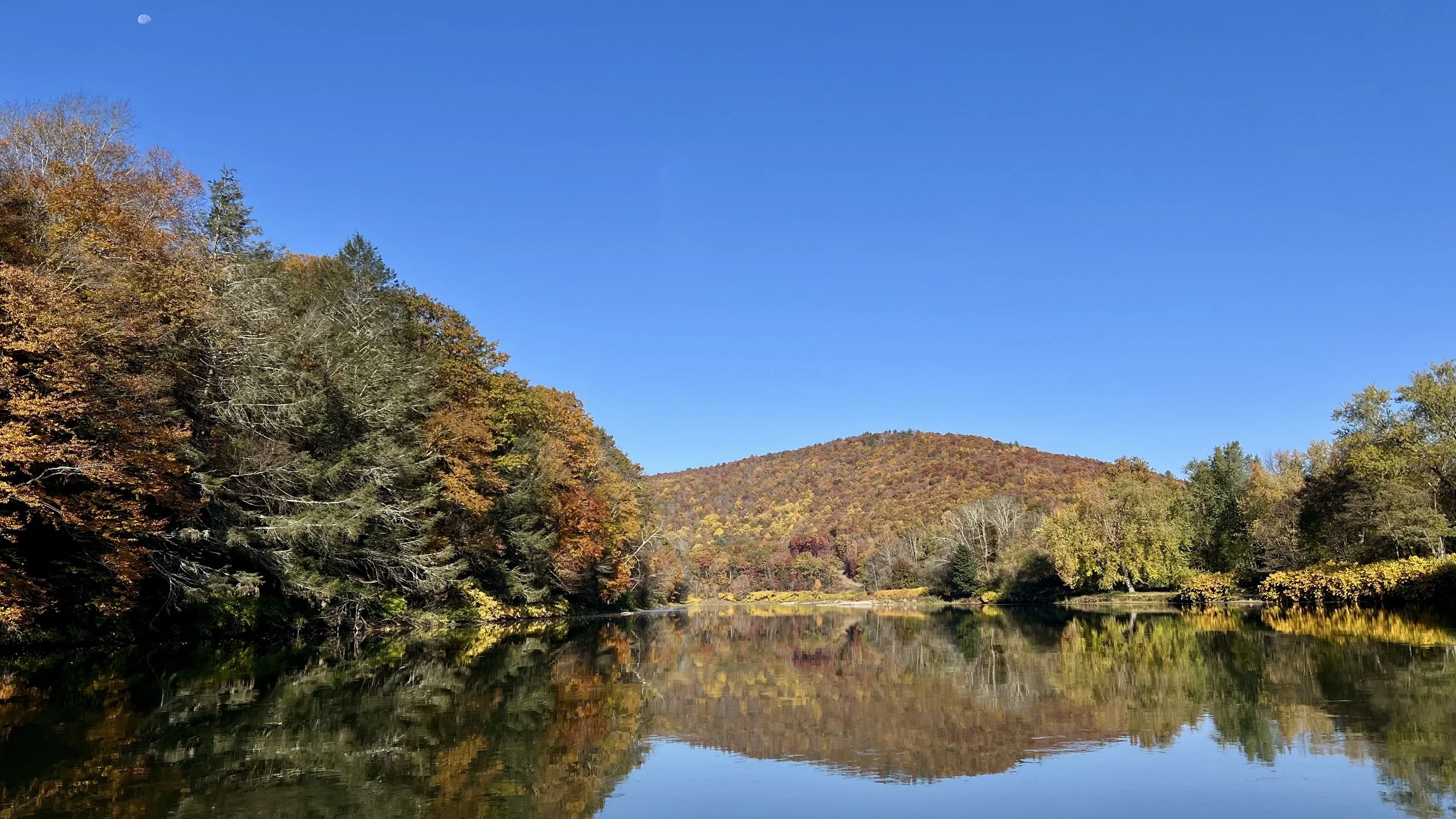
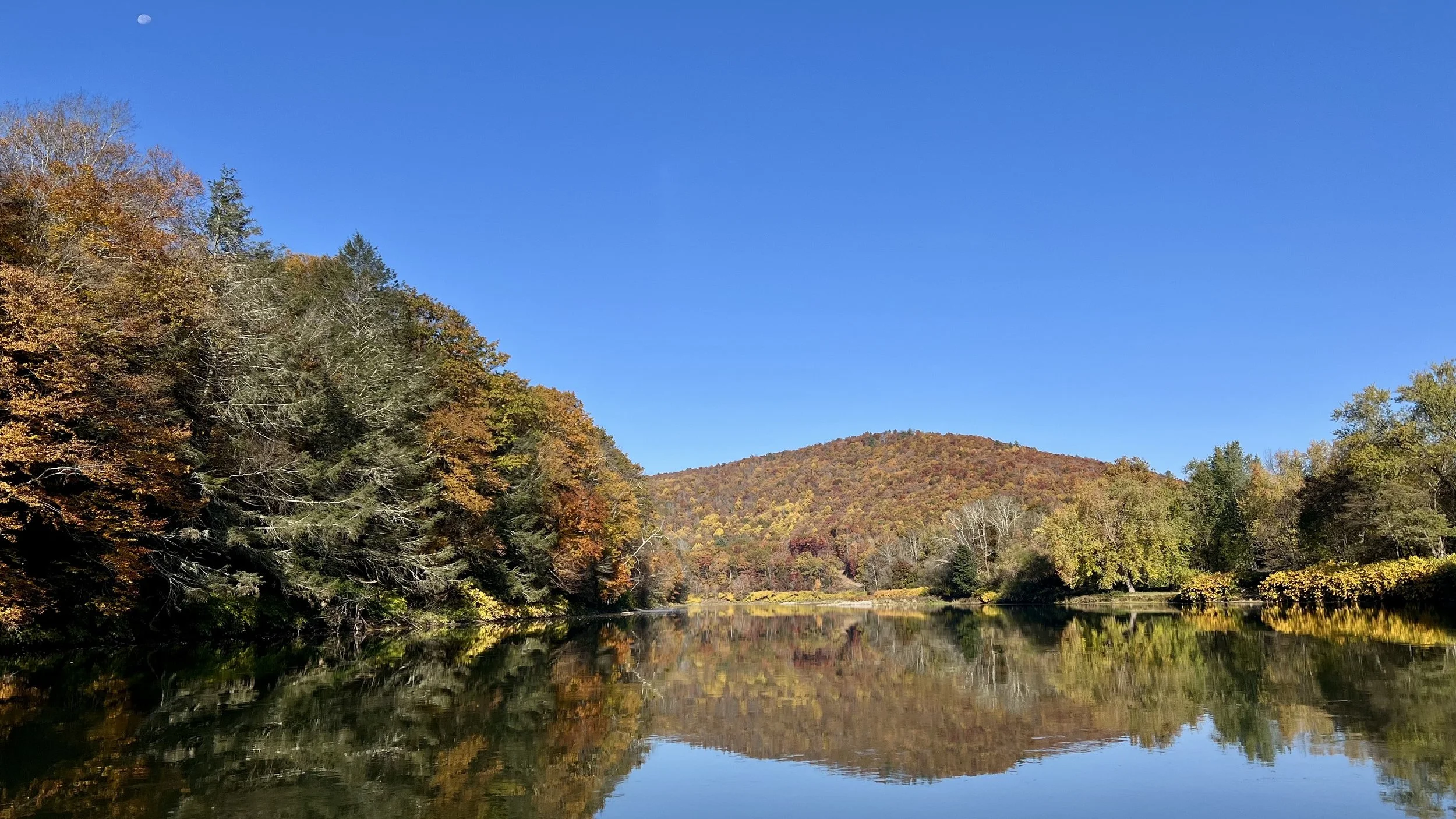
In 2020, the New York State Department of Environmental Conservation (DEC) adopted its first ever statewide trout river management plan. This was a very positive and laudable step forward in protecting the state’s trout rivers. The plan focuses on long term conservation goals including enhanced biological monitoring and habitat protection.
One regulatory change in the state plan that caught the attention of many UDR tailwaters anglers was a new year-round angling season established for almost all the state’s trout rivers including the Upper Delaware system.
For most of the UDR tailwaters system, the angling season historically ended on October 15 and resumed in early April. While we understand an approach that expands public angling opportunities, the UDR conservation and angling community were very concerned about the potential impacts of year-round fishing, especially the disturbance of spawning beds (aka “redds”) during the sensitive brown and brook trout spawning period in the fall.
Many comments from the UDR conservation and angling community were submitted on the plan expressing concern and opposition to the proposed year-round season as the plan was nearing the finish line.
The DEC thoughtfully considered these comments but ultimately decided not to remove the expanded angling season created by the plan citing an absence of data indicating potential threats and the broader societal and cultural benefits of increased public angling opportunities.
Despite this decision, our comments helped persuade the DEC to dedicate resources to monitor the impacts of year-round angling in the 9 “Wild Premier” rivers across the state that were created by the plan which included the UDR tailwaters system. The agency designed a monitoring approach in stretches of the UDR tailwaters that are known to host significant wild trout spawning activity and are popular among UDR anglers. Evaluative metrics included the robustness of “Young of the Year” wild trout populations and regular visual inspections of angler activity.
The results? With caution, we can report so far, so good. The results of the initial 3-year monitoring study indicate that increased angling pressure is not occurring at alarming levels during the extended season and that wild trout populations are not experiencing biological threats in the UDR tailwaters.
The results of the impact study are great news, but ongoing agency monitoring and cautious angler behavior is paramount. FUDR, TU, and our conservation partners are working to assure continued minimal impacts from year-round angling. We are interested in identifying and securing new resources to enhance the robustness of the ongoing agency UDR monitoring efforts and on angler education about the sensitivity of fishing the UDR tailwaters during wild trout spawning periods.
Some things to consider as a UDR tailwater angler:
Give Trout the Space to Thrive
At Friends of the Upper Delaware River, we encourage anglers to give wild trout a break so they can complete their life cycle and ensure strong, healthy populations for years to come.
During spawning seasons, you can make a real difference by choosing where and how you fish:
Fish stocked streams and lakes. These waters offer excellent opportunities year-round without impacting wild spawning trout. You’ll still enjoy great fishing while supporting sustainable management practices.
Target deeper runs and pools. Focus your time where trout are holding outside of spawning areas.
Respect spawning activity. When you see trout paired up or behaving differently in shallow gravel, give them plenty of space to complete their work undisturbed.
Share what you see. Report spawning observations to FUDR — your insights strengthen conservation data and support DEC monitoring.
Be a river steward. Most UDR anglers already take care to avoid sensitive areas during spawning season — a proud tradition that helps keep this fishery among the best in the East.
By focusing your fishing on stocked waters and stable holding areas, you help protect the next generation of wild trout — ensuring that the Upper Delaware River continues to thrive for everyone who loves it.
For the River,
Jeff
One Bug 2025 Wrap Up!
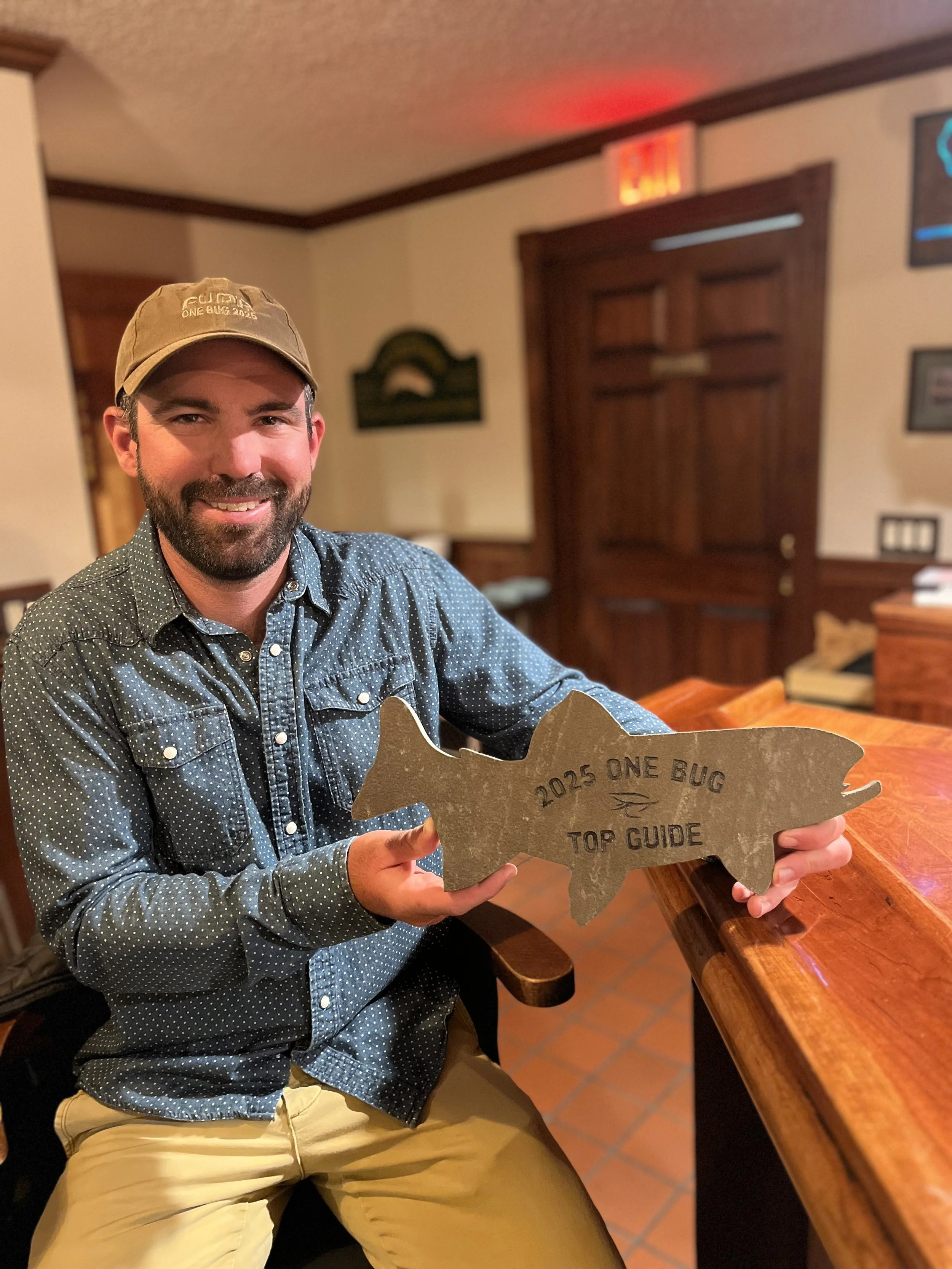
The 18th FUDR One Bug was held on April 25th and 26th. 60 anglers (30 teams) participated in the event accompanied by 30 UDR flyfishing guides.
FUDR Board Chair Craig Bouslough hosted a high energy kick-off dinner at his house on the main stem the evening before the first day of fishing. The excitement and camaraderie were evident throughout the night as old friends reunited and new participants soaked in as much information as possible about fishing the One Bug and what it means to FUDR as an organization.
We extend our deep appreciation to Pitmaster Mike, Nikel City Chef JJand Joe Miller (the son of legendary UDR guide Bruce Miller) for the delicious appetizers and main course. Great job!
Our musicians for the evening – Rich Thomas, Darren Rist, and Todd Coolman – found the right rhythms for the evening and kept our guests entertained all night. First time One Bug river guide Pete Horger surprised us all with an impromptu accompaniment on his trumpet. Nice work guys!
Sherri Resti Thomas and Shell Dufton deserve a resounding round of applause for their meticulous planning and hard work to ensure every moment of the One Bug seamlessly unfolds. It’s a big job, with many details, and takes almost the entire year to organize. If you get a chance, please send Sherri and Shell a note of appreciation for all their great work!
In the days leading up to the One Bug, low water levels in the UDR tailwaters prevented us from assigning river beats to the East Branch and much of the West Branch. This forced us downriver all the way to Damascus, PA. We extend our deepest gratitude to the members of the Indian Springs Flyfishing Club who gave us permission to use their boat ramp which helped create more space on the river for our One Bug participants.
As often happens, everything changed on Day 2 when Mother Nature threw us a curveball with substantial overnight rainfall that dramatically raised river levels and muddied the waters. Adding to the challenge was a persistent wind over the two days and cold air temperatures on Saturday that challenged even the most proficient fly casters.
Veteran One Buggers are no strangers to tough early spring weather and water conditions on the UDR. It’s always amazing how so many of our anglers manage to catch fish even under these adverse conditions. This is especially notable given the prohibition on cycling through their fly boxes!
Part of that equation is the expert guides that are constantly reading river conditions and searching for those spots that will maximize success for our anglers. Hats off to our guides whose river knowledge, stamina, and “can-do” spirit ensures a top-notch experience for all our One Bug participants.
One of the most special elements of the One Bug is the team representing the Canfield/FUDR flyfishing summer camp for kids. This year camp graduates Caden Scofield, Niccolo Soccodato, Isaac Jensen, and Peter Fleckenstein fished the One Bug. Under tough conditions, these emerging young anglers and conservationists held their own, and we are so proud to have them as part of the event. Of special note, Caden caught one of the largest fish over the two days, a 19 ½ inch brown trout! A very special “thank you” goes out to Sam Decker for guiding our camp kids on both days. Great work Sam!
The One Bug is such a special event and so important in supporting FUDR’s river conservation work. We couldn’t do it without our event sponsors and local businesses.
Thanks to everyone who supported the 2025 One Bug!
List of sponsors
Alex Smith-Constantine
Nori and Erick Lewis
Sam & Wayne Decker
FUDR Bug Study Team
Blitzbound / Jason Dapra
Grundéns
And the winners…
Top Individual
1st 562 Tony Kocis (Team Glo Bug Yinzers)
2nd 500 Mike Klotz (Team Reel Spirits)
3rd 482 Long Nguyen (Team Fi-Nance)
Top Teams
1st 872 600 Pounds of Sin (Nick Rubicco & James Larkin)
2nd 862 Glo Bug Yinzers (Tony Kocis & Chris Horn)
3rd 852 Team Fi-Nance (Long Nguyen & Mitchell Kaliner)
Top Guides
1st 882 Justin Siegel
2nd 822 Brian Sheppard
3rd 790 Darren Rist
Squirrel Award (the most heroic rescue of an imperiled fly) - Darren Rist
Golden Sandal Award (best story of the weekend) - Brook Bindus
Biggest Fish - 21” Brown Trout Mitchell Kaliner on a Hendrickson Emerger

Exciting Changes at FUDR!

Friends of the Upper Delaware River (FUDR) has undergone a significant transition in the last couple of months.
We are thrilled to announce that Molly Oliver is the new FUDR Executive Director and Jeff Skelding will be the Angling Advocate for the organization.
Molly has worked for FUDR for more than 7 years and has been a driver of innovation and creativity, opening exciting new pathways for the organization. Prior to that, Molly worked for the Delaware County (NY) Department of Watershed Affairs representing local interests and addressing technical issues associated with the New York City watershed.
Molly has been highly successful in developing new programs for FUDR that advance our mission of protecting the watershed and the communities and people that reside here. Molly played a critical leadership role in broadening FUDR’s partnerships and coalitions and developing a comprehensive watershed protection program for the Upper Delaware River in New York.
In close partnership with our conservation partners including Trout Unlimited, Molly helped secure more than $9 million in funding since 2018 from federal and state sources for on-the-ground projects in the Upper Delaware River watershed that improve water quality, protect public infrastructure, mitigate flooding, protect wild trout habitat, and enhance recreational opportunities on the river.
Through her years at FUDR, Molly has developed highly productive relationships with a wide diversity of watershed stakeholders and government decisionmakers at the federal, state, and local level and is well positioned to take the helm at FUDR.
We are grateful to have Molly as our new Executive Director and look forward to her leadership as our organization evolves and grows!
Jeff Skelding new role as Angling Advocate will be focused on policy and communications associated with the UDR tailwater trout fishery including the implementation of a new trout management plan for the UDR and the renewal of the New York City Delaware basin reservoir management plan (FFMP) in 2028.
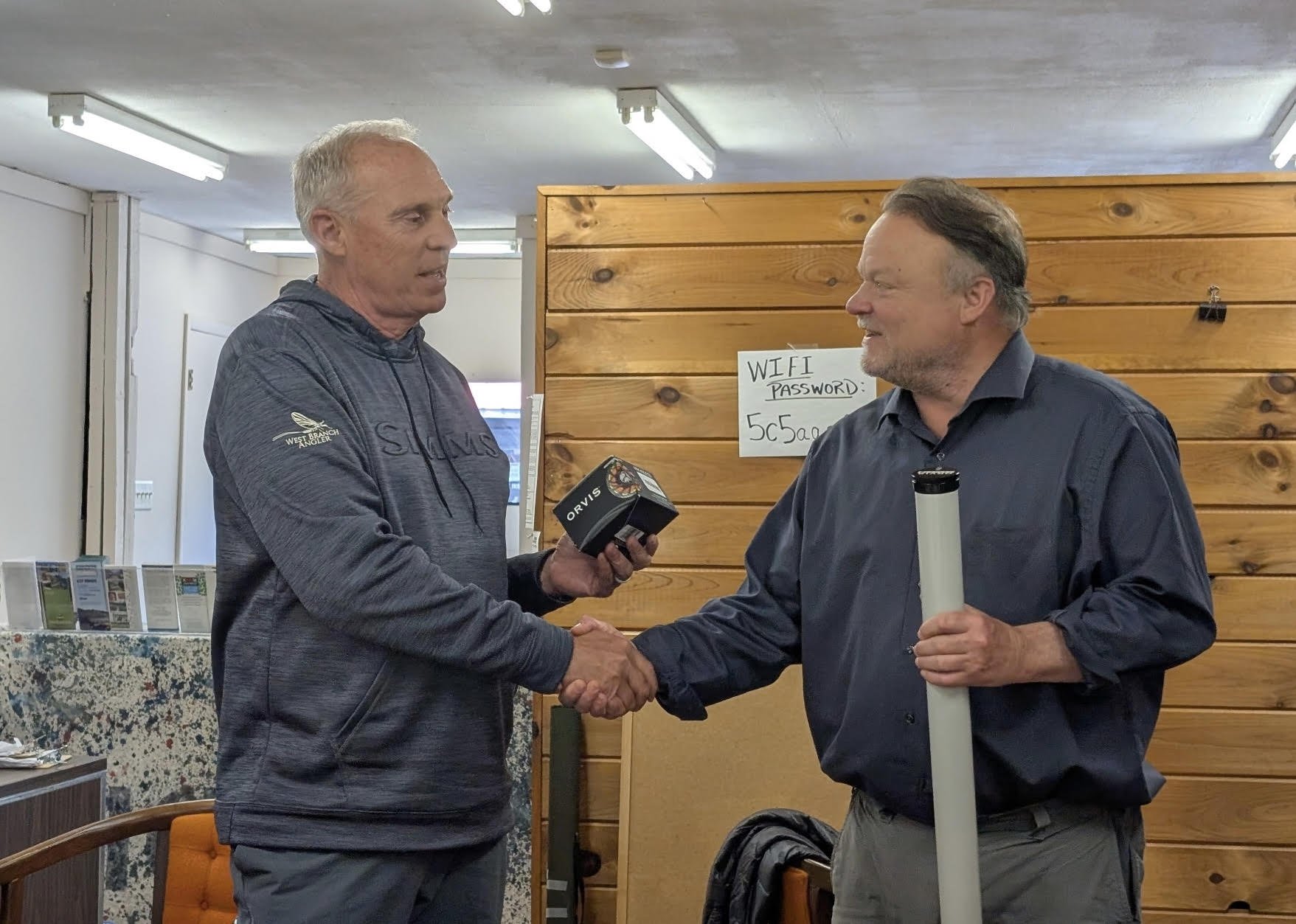
Many of our members and supporters know that the origins of FUDR are rooted in angling and protection of the UDR tailwater fishery. What we discovered over the years is there is no separation between protecting people and communities and protecting trout. As a result, our mission broadened and FUDR is now best described as a community-based watershed organization.
As we expanded, FUDR never lost our focus on important angling issues. Through Jeff’s leadership at FUDR and in collaboration with our conservation partners, we helped spark a joint effort on the part of New York and Pennsylvania to initiate a scientific study of the UDR fishery which led to the first-ever UDR Wild Trout Management Plan endorsed by both states. Ensuring that reservoir management continues to protect wild trout and working closely with the states to implement a robust UDR trout management plan are two of the most critical pieces for the long-term protection of the UDR tailwater fishery.
Please feel free to contact Molly or Jeff or drop by the Hancock office when you are in town, if you are interested in discussing any of the important work of FUDR.
We appreciate your support and will need your involvement as we continue to tackle the many challenging issues facing the Upper Delaware River watershed!